How to respond to One Word texts
Table of Contents
- Understanding One Word Texts
- Responding to One Word Texts
- Keeping Conversations Alive
- Common Mistakes to Avoid
- Advanced Strategies for Responding
Understanding One Word Texts
One word texts can be frustrating and confusing, but they don't have to be. By understanding the context and intent behind these brief messages, you can respond in a way that keeps the conversation going. One word texts can be a sign of busy-ness, distraction, or even shyness. They can also be a way of testing the waters or gauging interest. Whatever the reason, it's essential to respond in a way that acknowledges the message and encourages further conversation.
Responding to One Word Texts
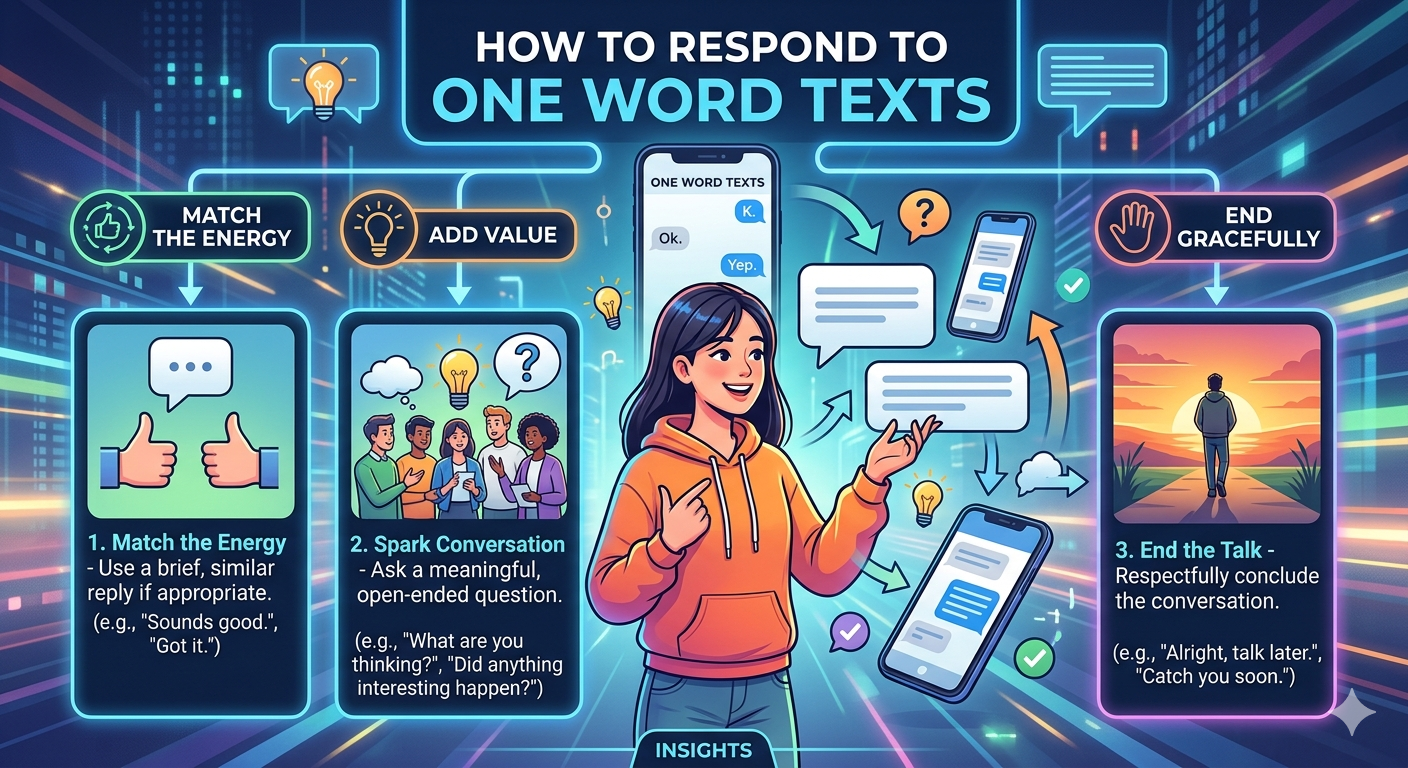
When responding to one word texts, it's crucial to avoid making assumptions or taking the message personally. Instead, try to ask open-ended questions or make a lighthearted comment that shows you're interested in talking. For example, if someone responds with a simple "Hey," you could say "Hey! How's your day going so far?" or "What's new with you?" This approach shows that you're willing to engage in conversation and can help to break the ice.
Keeping Conversations Alive
Keeping conversations alive can be challenging, especially when the other person is responding with one word texts. However, by using a combination of open-ended questions, active listening, and creative responses, you can keep the conversation going. Try to find common ground or shared interests to talk about, and don't be afraid to share your own thoughts and experiences. Remember, the goal is to have a conversation, not to interview or interrogate the other person.
Common Mistakes to Avoid
When responding to one word texts, there are several common mistakes to avoid. One of the most significant mistakes is taking the message personally or getting defensive. This can lead to a negative and unproductive conversation. Another mistake is responding with a one word text of your own, which can come across as dismissive or uninterested. Finally, avoid making assumptions or jumping to conclusions based on a single word or phrase. Instead, try to ask questions and seek clarification to ensure you understand the other person's perspective.
Advanced Strategies for Responding
For more advanced responders, there are several strategies you can use to take your conversations to the next level. One approach is to use humor or wit to add some personality to your responses. Another strategy is to use active listening skills, such as paraphrasing or reflecting, to show that you're engaged and interested in the conversation. You can also try using creative or thought-provoking questions to stimulate discussion and keep the conversation going.
Frequently Asked Questions
What if the other person continues to respond with one word texts?
If the other person continues to respond with one word texts, it may be a sign that they're not interested in having a conversation. In this case, it's essential to respect their boundaries and not push the issue. You can try saying something like "I feel like we're not really connecting. Is everything okay?" or "I'm getting the sense that you're not really up for talking. If that's the case, no worries at all." This approach shows that you're considerate of the other person's feelings and willing to adapt to the situation.
How can I avoid overthinking or analyzing one word texts?
Overthinking or analyzing one word texts can be a common pitfall, especially if you're someone who tends to worry or ruminate. To avoid this, try to focus on the present moment and the conversation at hand. Instead of analyzing the other person's message, try to respond in a way that feels natural and authentic. You can also try to practice mindfulness or meditation to help you stay grounded and centered in your interactions.
What if I'm not sure how to respond to a one word text?
If you're not sure how to respond to a one word text, don't worry! It's okay to take a moment to think before responding. You can try asking yourself questions like "What is the context of this conversation?" or "What is the other person trying to communicate?" You can also try to think about your own feelings and intentions, and respond in a way that feels true to yourself. Remember, the goal is to have a conversation, not to come up with the perfect response.
Can I use one word texts to my advantage in a conversation?
While one word texts can be frustrating, they can also be used to your advantage in a conversation. For example, you can use a one word text to add emphasis or humor to a message. You can also use a one word text to create a sense of intrigue or mystery, which can be an effective way to keep the conversation going. Ultimately, the key is to be creative and adaptable in your responses, and to use one word texts in a way that feels natural and authentic.
How can I balance being responsive with being respectful of the other person's boundaries?
Balancing being responsive with being respectful of the other person's boundaries is crucial in any conversation. To achieve this balance, try to be mindful of the other person's cues and responses. If they seem hesitant or uninterested, it may be a sign that they need some space or time to think. On the other hand, if they seem engaged and enthusiastic, you can respond in a way that shows you're interested and invested in the conversation. Remember, the goal is to have a mutual and respectful conversation, not to push the other person's boundaries or try to control the interaction.