Subtle Negging vs Healthy Teasing
Table of Contents
- Introduction to Negging and Teasing
- Understanding the Difference between Negging and Teasing
- Recognizing the Signs of Negging
- Responding to Negging Behavior
- Building Healthy Relationships through Positive Communication
Introduction to Negging and Teasing
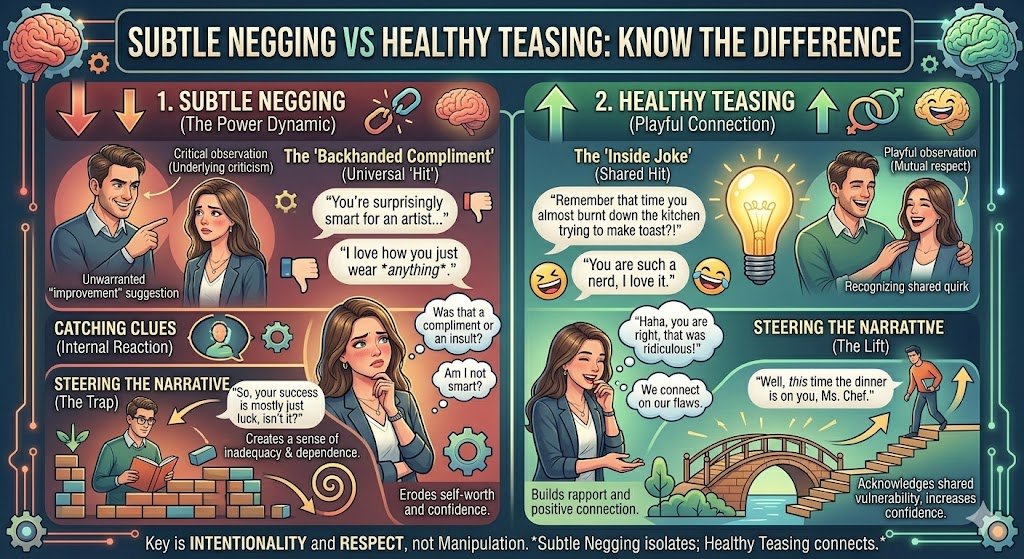
Negging and teasing are two concepts that are often misunderstood or used interchangeably. However, they have distinct meanings and implications in the context of relationships. Negging refers to the act of giving backhanded compliments or subtle insults to undermine someone's confidence or self-esteem. On the other hand, teasing is a lighthearted and playful way of interacting with someone, often used to build rapport and create a sense of humor. In this article, we will explore the differences between negging and teasing, and provide guidance on how to recognize and respond to manipulative behavior.
Understanding the Difference between Negging and Teasing
The key to distinguishing between negging and teasing lies in the intent and tone of the interaction. Negging is often used as a tactic to gain power or control over someone, whereas teasing is a natural and playful way of interacting with others. When someone is negging, they may use backhanded compliments or subtle insults to make the other person feel inferior or insecure. In contrast, teasing is a mutual and consensual interaction that is meant to be lighthearted and fun. It's essential to be aware of the differences between negging and teasing to build healthy and positive relationships.
Recognizing the Signs of Negging
Recognizing the signs of negging can be challenging, as it often masquerades as flirting or playful banter. However, there are some common signs to look out for, such as backhanded compliments, subtle insults, or constant one-upping. If someone is consistently making you feel inferior or insecure, it may be a sign of negging. Additionally, if you find yourself constantly seeking validation or approval from the other person, it may be a sign of manipulative behavior. It's essential to trust your instincts and pay attention to how you feel in the interaction.
Responding to Negging Behavior
Responding to negging behavior requires assertive communication and boundary-setting. If someone is negging you, it's essential to address the behavior directly and clearly. You can say something like, "I feel uncomfortable when you make comments like that. Please stop." or "I don't appreciate it when you talk to me like that. Let's communicate respectfully." It's also essential to prioritize self-care and seek support from trusted friends, family, or mental health professionals. Remember that you deserve to be treated with respect and kindness, and it's okay to set boundaries or distance yourself from someone who is manipulative or toxic.
Building Healthy Relationships through Positive Communication
Building healthy relationships requires positive communication, mutual respect, and trust. It's essential to prioritize open and honest communication, active listening, and empathy. When interacting with someone, focus on building each other up, rather than tearing each other down. Use positive language, avoid criticism or blame, and show appreciation and gratitude. By prioritizing positive communication and mutual respect, you can build strong and healthy relationships that are based on trust, empathy, and understanding.
What is negging, and how does it differ from teasing?
Negging is a form of emotional manipulation that involves giving backhanded compliments or subtle insults to undermine someone's confidence or self-esteem. It differs from teasing, which is a lighthearted and playful way of interacting with someone. While teasing is meant to be mutual and consensual, negging is often used as a tactic to gain power or control over someone.
How can I recognize the signs of negging?
Recognizing the signs of negging can be challenging, but there are some common signs to look out for, such as backhanded compliments, subtle insults, or constant one-upping. If someone is consistently making you feel inferior or insecure, it may be a sign of negging. Additionally, if you find yourself constantly seeking validation or approval from the other person, it may be a sign of manipulative behavior.
What can I do if someone is negging me?
If someone is negging you, it's essential to address the behavior directly and clearly. You can say something like, "I feel uncomfortable when you make comments like that. Please stop." or "I don't appreciate it when you talk to me like that. Let's communicate respectfully." It's also essential to prioritize self-care and seek support from trusted friends, family, or mental health professionals.
How can I build healthy relationships through positive communication?
Building healthy relationships requires positive communication, mutual respect, and trust. It's essential to prioritize open and honest communication, active listening, and empathy. When interacting with someone, focus on building each other up, rather than tearing each other down. Use positive language, avoid criticism or blame, and show appreciation and gratitude.
What is the difference between negging and gaslighting?
Negging and gaslighting are both forms of emotional manipulation, but they differ in their intent and tactics. Negging involves giving backhanded compliments or subtle insults to undermine someone's confidence or self-esteem, whereas gaslighting involves manipulating someone's perception of reality. While negging is often used to gain power or control over someone, gaslighting is often used to make someone doubt their own sanity or memory.
How can I prioritize self-care when dealing with negging or manipulative behavior?
Prioritizing self-care is essential when dealing with negging or manipulative behavior. It's essential to take care of your physical, emotional, and mental well-being by engaging in activities that bring you joy and relaxation. Seek support from trusted friends, family, or mental health professionals, and prioritize boundaries and self-respect. Remember that you deserve to be treated with respect and kindness, and it's okay to distance yourself from someone who is manipulative or toxic.
Frequently Asked Questions
What is negging, and how does it differ from teasing?
Negging is a form of emotional manipulation that involves giving backhanded compliments or subtle insults to undermine someone's confidence or self-esteem. It differs from teasing, which is a lighthearted and playful way of interacting with someone. While teasing is meant to be mutual and consensual, negging is often used as a tactic to gain power or control over someone.
How can I recognize the signs of negging?
Recognizing the signs of negging can be challenging, but there are some common signs to look out for, such as backhanded compliments, subtle insults, or constant one-upping. If someone is consistently making you feel inferior or insecure, it may be a sign of negging. Additionally, if you find yourself constantly seeking validation or approval from the other person, it may be a sign of manipulative behavior.
What can I do if someone is negging me?
If someone is negging you, it's essential to address the behavior directly and clearly. You can say something like, "I feel uncomfortable when you make comments like that. Please stop." or "I don't appreciate it when you talk to me like that. Let's communicate respectfully." It's also essential to prioritize self-care and seek support from trusted friends, family, or mental health professionals.
How can I build healthy relationships through positive communication?
Building healthy relationships requires positive communication, mutual respect, and trust. It's essential to prioritize open and honest communication, active listening, and empathy. When interacting with someone, focus on building each other up, rather than tearing each other down. Use positive language, avoid criticism or blame, and show appreciation and gratitude.
What is the difference between negging and gaslighting?
Negging and gaslighting are both forms of emotional manipulation, but they differ in their intent and tactics. Negging involves giving backhanded compliments or subtle insults to undermine someone's confidence or self-esteem, whereas gaslighting involves manipulating someone's perception of reality. While negging is often used to gain power or control over someone, gaslighting is often used to make someone doubt their own sanity or memory.
How can I prioritize self-care when dealing with negging or manipulative behavior?
Prioritizing self-care is essential when dealing with negging or manipulative behavior. It's essential to take care of your physical, emotional, and mental well-being by engaging in activities that bring you joy and relaxation. Seek support from trusted friends, family, or mental health professionals, and prioritize boundaries and self-respect. Remember that you deserve to be treated with respect and kindness, and it's okay to distance yourself from someone who is manipulative or toxic.