The Delayed Reply psychology When to use it
Table of Contents
- Introduction to Delayed Reply Psychology
- Understanding the Reasons Behind Delayed Replies
- The Impact of Delayed Replies on Relationships
- When to Use Delayed Reply Psychology
- Best Practices for Implementing Delayed Reply Psychology
Introduction to Delayed Reply Psychology
Delayed reply psychology refers to the practice of intentionally delaying responses to messages, texts, or emails in order to achieve a specific goal or outcome. This technique can be used in various contexts, including personal and professional relationships, online dating, and even marketing. The idea behind delayed reply psychology is to create a sense of anticipation, curiosity, or intrigue, which can ultimately lead to a more engaging and meaningful interaction.
Understanding the Reasons Behind Delayed Replies
There are several reasons why people may use delayed reply psychology, including the desire to appear busy or important, to create a sense of mystery or intrigue, or to avoid feeling overwhelmed or pressured to respond immediately. In some cases, delayed replies may be used as a way to test the other person's interest or commitment, or to gain an upper hand in a conversation or negotiation. However, it's essential to use delayed reply psychology judiciously and with consideration for the other person's feelings and needs.
The Impact of Delayed Replies on Relationships
Delayed replies can have both positive and negative effects on relationships, depending on the context and the individuals involved. On the one hand, delayed replies can create a sense of anticipation and excitement, which can be beneficial in the early stages of a relationship or in a marketing campaign. On the other hand, delayed replies can also lead to feelings of frustration, anxiety, or rejection, particularly if the other person is left waiting for an extended period without any communication.
When to Use Delayed Reply Psychology
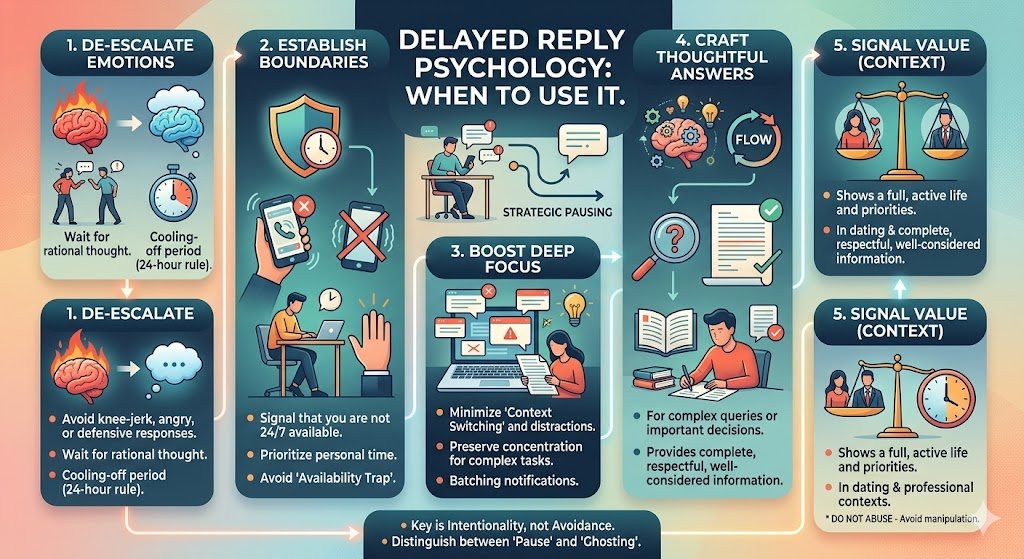
Delayed reply psychology can be effective in certain situations, such as when you want to create a sense of intrigue or mystery, or when you need time to think before responding to a message or question. However, it's essential to use this technique judiciously and with consideration for the other person's feelings and needs. For example, if someone is reaching out to you with a urgent or important question, it's generally best to respond promptly and directly. On the other hand, if you're engaging in a casual conversation or online dating, delayed replies can be a useful way to build anticipation and create a sense of excitement.
Best Practices for Implementing Delayed Reply Psychology
To use delayed reply psychology effectively, it's essential to consider the context and the other person's feelings and needs. Here are some best practices to keep in mind: be mindful of the other person's time and attention, use delayed replies sparingly and with consideration, be consistent in your communication style, and avoid using delayed replies as a way to manipulate or control others. By following these guidelines, you can use delayed reply psychology to create more engaging and meaningful interactions, while also being respectful and considerate of others.
What are the benefits of using delayed reply psychology?
The benefits of using delayed reply psychology include creating a sense of anticipation and excitement, building intrigue and mystery, and gaining an upper hand in a conversation or negotiation. Additionally, delayed replies can give you time to think before responding to a message or question, which can help you to communicate more effectively and avoid making mistakes.
How can I use delayed reply psychology in online dating?
Delayed reply psychology can be a useful technique in online dating, as it can create a sense of anticipation and excitement. However, it's essential to use this technique judiciously and with consideration for the other person's feelings and needs. For example, you might delay your response to a message for a few hours or a day, in order to create a sense of intrigue and mystery. However, be sure to respond eventually, and avoid leaving the other person waiting for an extended period without any communication.
Can delayed reply psychology be used in professional relationships?
Delayed reply psychology can be used in professional relationships, but it's essential to use this technique with caution and consideration for the other person's feelings and needs. For example, you might delay your response to an email or message in order to think before responding, or to create a sense of anticipation and excitement. However, be sure to respond promptly and directly when dealing with urgent or important matters, and avoid using delayed replies as a way to manipulate or control others.
How can I avoid using delayed reply psychology in a way that is manipulative or controlling?
To avoid using delayed reply psychology in a way that is manipulative or controlling, it's essential to be mindful of the other person's feelings and needs. Be sure to respond promptly and directly when dealing with urgent or important matters, and avoid using delayed replies as a way to gain an upper hand in a conversation or negotiation. Additionally, be consistent in your communication style, and avoid using delayed replies as a way to create unnecessary drama or tension.
What are the risks of using delayed reply psychology?
The risks of using delayed reply psychology include creating feelings of frustration, anxiety, or rejection in the other person, particularly if they are left waiting for an extended period without any communication. Additionally, delayed replies can be perceived as rude or dismissive, which can damage relationships and reputations. To avoid these risks, it's essential to use delayed reply psychology judiciously and with consideration for the other person's feelings and needs.
Frequently Asked Questions
What are the benefits of using delayed reply psychology?
The benefits of using delayed reply psychology include creating a sense of anticipation and excitement, building intrigue and mystery, and gaining an upper hand in a conversation or negotiation. Additionally, delayed replies can give you time to think before responding to a message or question, which can help you to communicate more effectively and avoid making mistakes.
How can I use delayed reply psychology in online dating?
Delayed reply psychology can be a useful technique in online dating, as it can create a sense of anticipation and excitement. However, it's essential to use this technique judiciously and with consideration for the other person's feelings and needs. For example, you might delay your response to a message for a few hours or a day, in order to create a sense of intrigue and mystery. However, be sure to respond eventually, and avoid leaving the other person waiting for an extended period without any communication.
Can delayed reply psychology be used in professional relationships?
Delayed reply psychology can be used in professional relationships, but it's essential to use this technique with caution and consideration for the other person's feelings and needs. For example, you might delay your response to an email or message in order to think before responding, or to create a sense of anticipation and excitement. However, be sure to respond promptly and directly when dealing with urgent or important matters, and avoid using delayed replies as a way to manipulate or control others.
How can I avoid using delayed reply psychology in a way that is manipulative or controlling?
To avoid using delayed reply psychology in a way that is manipulative or controlling, it's essential to be mindful of the other person's feelings and needs. Be sure to respond promptly and directly when dealing with urgent or important matters, and avoid using delayed replies as a way to gain an upper hand in a conversation or negotiation. Additionally, be consistent in your communication style, and avoid using delayed replies as a way to create unnecessary drama or tension.
What are the risks of using delayed reply psychology?
The risks of using delayed reply psychology include creating feelings of frustration, anxiety, or rejection in the other person, particularly if they are left waiting for an extended period without any communication. Additionally, delayed replies can be perceived as rude or dismissive, which can damage relationships and reputations. To avoid these risks, it's essential to use delayed reply psychology judiciously and with consideration for the other person's feelings and needs.