How to use Agentic AI to automate small business workflows
Table of Contents
- Introduction to Agentic AI
- Benefits of Agentic AI for Small Businesses
- Implementing Agentic AI Workflows
- Real-World Examples of Agentic AI in Small Businesses
- Best Practices for Agentic AI Adoption
Introduction to Agentic AI
Agentic AI is a type of artificial intelligence that enables autonomous decision-making, planning, and execution of workflows. It has the potential to revolutionize the way small businesses operate, by automating routine tasks and freeing up resources for more strategic activities. With Agentic AI, small businesses can create customized workflows that integrate with various applications and systems, allowing for seamless automation and increased productivity.
Benefits of Agentic AI for Small Businesses
The benefits of Agentic AI for small businesses are numerous. By automating routine tasks, small businesses can reduce labor costs, increase efficiency, and improve accuracy. Agentic AI can also help small businesses to scale more easily, by providing a flexible and adaptable workflow management system. Additionally, Agentic AI can provide real-time insights and analytics, enabling small businesses to make data-driven decisions and stay ahead of the competition.
Implementing Agentic AI Workflows
Implementing Agentic AI workflows requires a thorough understanding of the business processes and requirements. Small businesses need to identify the areas where automation can have the most impact, and design workflows that integrate with existing systems and applications. This can be done using various tools and platforms, such as Google Workspace Studio, which provides a user-friendly interface for creating and managing Agentic AI workflows.
Real-World Examples of Agentic AI in Small Businesses
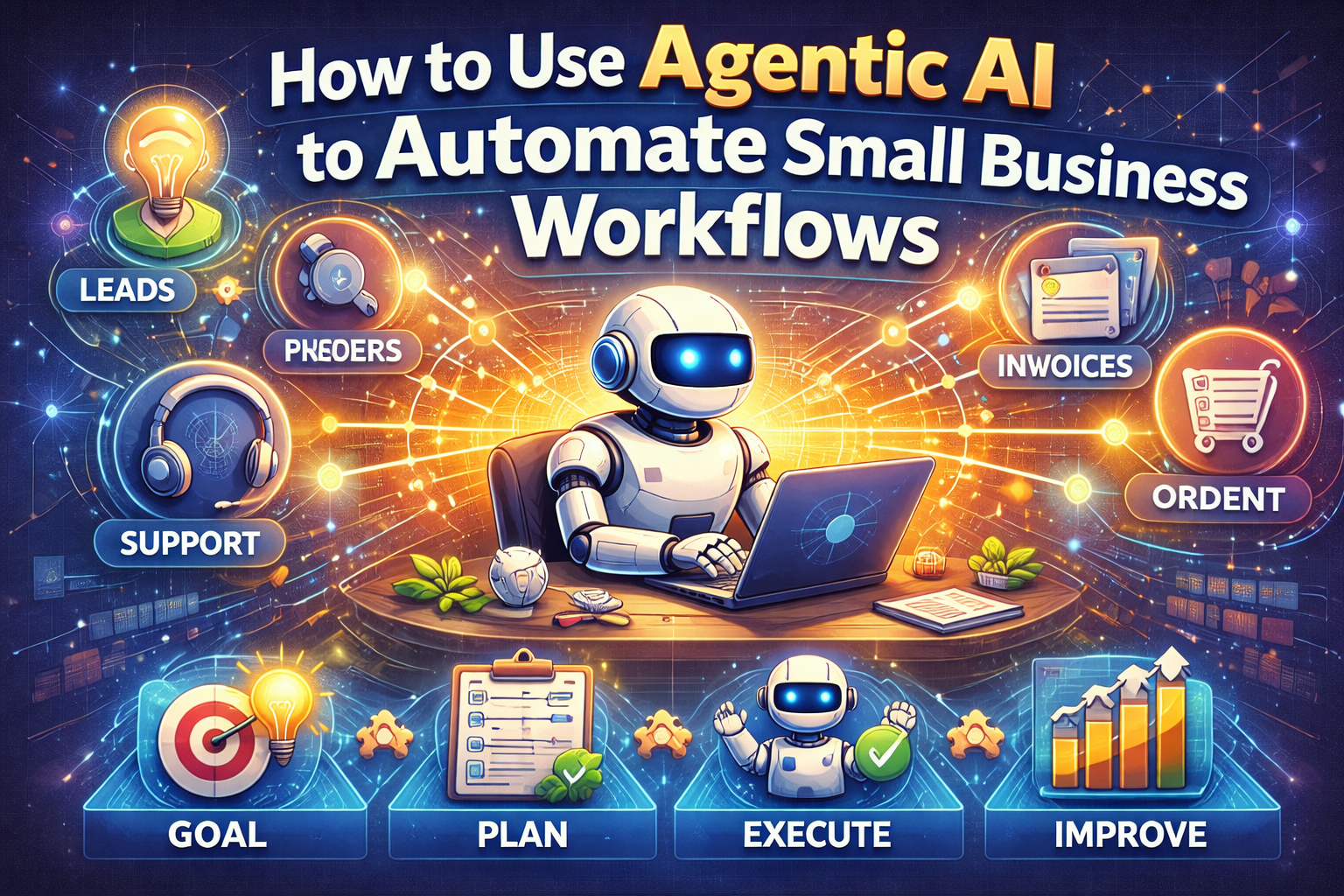
There are many real-world examples of Agentic AI in small businesses. For instance, a small accounting firm can use Agentic AI to automate tasks such as data entry, invoicing, and bookkeeping. A small e-commerce business can use Agentic AI to automate order processing, inventory management, and customer service. These are just a few examples of how Agentic AI can be applied in small businesses, and the possibilities are endless.
Best Practices for Agentic AI Adoption
When adopting Agentic AI, small businesses should follow best practices such as starting small, focusing on high-impact areas, and monitoring progress closely. It's also important to ensure that the Agentic AI system is integrated with existing systems and applications, and that the workflows are designed to be flexible and adaptable. Additionally, small businesses should provide training and support to employees, to ensure that they are comfortable using the Agentic AI system and can maximize its benefits.
What is Agentic AI and how does it work?
Agentic AI is a type of artificial intelligence that enables autonomous decision-making, planning, and execution of workflows. It works by using advanced algorithms and machine learning techniques to analyze data, identify patterns, and make decisions. Agentic AI can be integrated with various applications and systems, allowing for seamless automation and increased productivity.
What are the benefits of using Agentic AI in small businesses?
The benefits of using Agentic AI in small businesses include increased efficiency, reduced labor costs, and improved accuracy. Agentic AI can also help small businesses to scale more easily, by providing a flexible and adaptable workflow management system. Additionally, Agentic AI can provide real-time insights and analytics, enabling small businesses to make data-driven decisions and stay ahead of the competition.
How can small businesses implement Agentic AI workflows?
Small businesses can implement Agentic AI workflows by using various tools and platforms, such as Google Workspace Studio. This platform provides a user-friendly interface for creating and managing Agentic AI workflows, and can be integrated with existing systems and applications. Small businesses should also identify the areas where automation can have the most impact, and design workflows that meet their specific needs and requirements.
What are some real-world examples of Agentic AI in small businesses?
There are many real-world examples of Agentic AI in small businesses. For instance, a small accounting firm can use Agentic AI to automate tasks such as data entry, invoicing, and bookkeeping. A small e-commerce business can use Agentic AI to automate order processing, inventory management, and customer service. These are just a few examples of how Agentic AI can be applied in small businesses, and the possibilities are endless.
What are the best practices for Agentic AI adoption in small businesses?
When adopting Agentic AI, small businesses should follow best practices such as starting small, focusing on high-impact areas, and monitoring progress closely. It's also important to ensure that the Agentic AI system is integrated with existing systems and applications, and that the workflows are designed to be flexible and adaptable. Additionally, small businesses should provide training and support to employees, to ensure that they are comfortable using the Agentic AI system and can maximize its benefits.
How can small businesses measure the success of Agentic AI adoption?
Small businesses can measure the success of Agentic AI adoption by tracking key performance indicators (KPIs) such as productivity, efficiency, and customer satisfaction. They can also monitor the return on investment (ROI) of Agentic AI adoption, and adjust their workflows and strategies accordingly. Additionally, small businesses can conduct regular reviews and assessments to ensure that the Agentic AI system is meeting their needs and expectations.
Frequently Asked Questions
What is Agentic AI and how does it work?
Agentic AI is a type of artificial intelligence that enables autonomous decision-making, planning, and execution of workflows. It works by using advanced algorithms and machine learning techniques to analyze data, identify patterns, and make decisions. Agentic AI can be integrated with various applications and systems, allowing for seamless automation and increased productivity.
What are the benefits of using Agentic AI in small businesses?
The benefits of using Agentic AI in small businesses include increased efficiency, reduced labor costs, and improved accuracy. Agentic AI can also help small businesses to scale more easily, by providing a flexible and adaptable workflow management system. Additionally, Agentic AI can provide real-time insights and analytics, enabling small businesses to make data-driven decisions and stay ahead of the competition.
How can small businesses implement Agentic AI workflows?
Small businesses can implement Agentic AI workflows by using various tools and platforms, such as Google Workspace Studio. This platform provides a user-friendly interface for creating and managing Agentic AI workflows, and can be integrated with existing systems and applications. Small businesses should also identify the areas where automation can have the most impact, and design workflows that meet their specific needs and requirements.
What are some real-world examples of Agentic AI in small businesses?
There are many real-world examples of Agentic AI in small businesses. For instance, a small accounting firm can use Agentic AI to automate tasks such as data entry, invoicing, and bookkeeping. A small e-commerce business can use Agentic AI to automate order processing, inventory management, and customer service. These are just a few examples of how Agentic AI can be applied in small businesses, and the possibilities are endless.
What are the best practices for Agentic AI adoption in small businesses?
When adopting Agentic AI, small businesses should follow best practices such as starting small, focusing on high-impact areas, and monitoring progress closely. It's also important to ensure that the Agentic AI system is integrated with existing systems and applications, and that the workflows are designed to be flexible and adaptable. Additionally, small businesses should provide training and support to employees, to ensure that they are comfortable using the Agentic AI system and can maximize its benefits.
How can small businesses measure the success of Agentic AI adoption?
Small businesses can measure the success of Agentic AI adoption by tracking key performance indicators (KPIs) such as productivity, efficiency, and customer satisfaction. They can also monitor the return on investment (ROI) of Agentic AI adoption, and adjust their workflows and strategies accordingly. Additionally, small businesses can conduct regular reviews and assessments to ensure that the Agentic AI system is meeting their needs and expectations.