How to Master Playful Banter
Table of Contents
- Understanding the Basics of Banter
- Developing Your Wit and Humor
- Practicing Banter in Everyday Conversations
- Overcoming Common Challenges and Mistakes
- Advanced Techniques for Mastering Playful Banter
Understanding the Basics of Banter
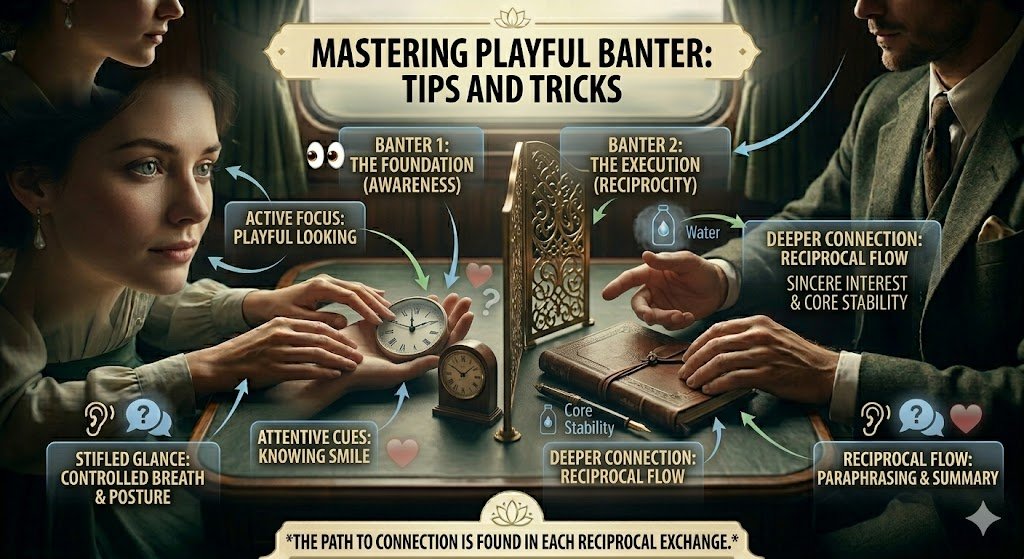
Playful banter is a form of conversational humor that involves the exchange of witty remarks and teasing comments. It's a way of building rapport and creating a lighthearted atmosphere in social interactions. To master playful banter, you need to understand the basics of humor and how to use it effectively in conversations. This includes developing your wit, being able to think on your feet, and knowing how to use body language and tone of voice to convey humor.
Developing Your Wit and Humor
Developing your wit and humor takes time and practice. One way to improve your wit is to observe how others use humor in conversations and to practice using humor in your own interactions. You can also try watching comedies, reading humorous books, and listening to podcasts or radio shows that feature witty banter. Additionally, you can try to be more spontaneous and playful in your conversations, using humor to deflect or respond to comments in a lighthearted way.
Practicing Banter in Everyday Conversations
Practicing banter in everyday conversations is key to mastering playful banter. Try to incorporate humor and wit into your daily interactions, whether it's with friends, family, or coworkers. You can start by using playful teasing or joking with others, and then build up to more complex forms of banter. Remember to always be respectful and considerate of others' feelings, and to avoid using humor that might be off-putting or offensive.
Overcoming Common Challenges and Mistakes
One of the biggest challenges of mastering playful banter is overcoming the fear of rejection or embarrassment. It's natural to feel nervous or self-conscious when trying to be funny or witty, especially if you're not used to it. However, the key is to be willing to take risks and to not be too hard on yourself if you make mistakes. Remember that banter is a two-way conversation, and that it's okay to stumble or make mistakes. The most important thing is to have fun and to be genuine in your interactions with others.
Advanced Techniques for Mastering Playful Banter
Once you've mastered the basics of banter, you can start to learn more advanced techniques for using humor and wit in conversations. This includes using irony, sarcasm, and wordplay to add complexity and depth to your banter. You can also try using storytelling and anecdotes to create a more engaging and humorous conversation. Additionally, you can try to use banter to build rapport and create a sense of connection with others, using humor to find common ground and to create a sense of shared experience.
What is the key to mastering playful banter?
The key to mastering playful banter is to be willing to take risks and to not be too hard on yourself if you make mistakes. It's also important to be genuine and authentic in your interactions with others, and to use humor and wit in a way that is respectful and considerate of others' feelings. With practice and patience, you can develop the skills and confidence you need to master playful banter and to use humor and wit to build rapport and create a sense of connection with others.
How can I use banter to build rapport and create a sense of connection with others?
You can use banter to build rapport and create a sense of connection with others by using humor and wit to find common ground and to create a sense of shared experience. This can involve using playful teasing or joking to create a sense of camaraderie and togetherness, or using irony and sarcasm to create a sense of irony and shared understanding. Additionally, you can try using storytelling and anecdotes to create a more engaging and humorous conversation, and to build a sense of connection and rapport with others.
What are some common mistakes to avoid when using banter in conversations?
Some common mistakes to avoid when using banter in conversations include using humor that is off-putting or offensive, being too aggressive or confrontational, and failing to read the other person's cues and boundaries. It's also important to avoid using banter as a way to belittle or mock others, and to instead use humor and wit to build rapport and create a sense of connection. Additionally, you should try to be mindful of the other person's feelings and to avoid using humor that might be hurtful or insensitive.
How can I use banter to diffuse tension and create a more lighthearted atmosphere in conversations?
You can use banter to diffuse tension and create a more lighthearted atmosphere in conversations by using humor and wit to redirect the conversation and to create a sense of playfulness and fun. This can involve using playful teasing or joking to create a sense of camaraderie and togetherness, or using irony and sarcasm to create a sense of irony and shared understanding. Additionally, you can try using storytelling and anecdotes to create a more engaging and humorous conversation, and to build a sense of connection and rapport with others.
What are some tips for using banter in text conversations or online interactions?
Some tips for using banter in text conversations or online interactions include using emojis and other forms of visual humor to add tone and personality to your messages, being mindful of the other person's cues and boundaries, and avoiding using humor that might be misinterpreted or lost in translation. You can also try using playful teasing or joking to create a sense of camaraderie and togetherness, or using irony and sarcasm to create a sense of irony and shared understanding. Additionally, you can try using storytelling and anecdotes to create a more engaging and humorous conversation, and to build a sense of connection and rapport with others.
How can I use banter to create a sense of playfulness and fun in my relationships?
You can use banter to create a sense of playfulness and fun in your relationships by using humor and wit to create a sense of lightheartedness and joy. This can involve using playful teasing or joking to create a sense of camaraderie and togetherness, or using irony and sarcasm to create a sense of irony and shared understanding. Additionally, you can try using storytelling and anecdotes to create a more engaging and humorous conversation, and to build a sense of connection and rapport with others. By using banter in a way that is respectful and considerate of others' feelings, you can create a sense of playfulness and fun in your relationships and build a stronger sense of connection and rapport with others.
Frequently Asked Questions
What is the key to mastering playful banter?
The key to mastering playful banter is to be willing to take risks and to not be too hard on yourself if you make mistakes. It's also important to be genuine and authentic in your interactions with others, and to use humor and wit in a way that is respectful and considerate of others' feelings. With practice and patience, you can develop the skills and confidence you need to master playful banter and to use humor and wit to build rapport and create a sense of connection with others.
How can I use banter to build rapport and create a sense of connection with others?
You can use banter to build rapport and create a sense of connection with others by using humor and wit to find common ground and to create a sense of shared experience. This can involve using playful teasing or joking to create a sense of camaraderie and togetherness, or using irony and sarcasm to create a sense of irony and shared understanding. Additionally, you can try using storytelling and anecdotes to create a more engaging and humorous conversation, and to build a sense of connection and rapport with others.
What are some common mistakes to avoid when using banter in conversations?
Some common mistakes to avoid when using banter in conversations include using humor that is off-putting or offensive, being too aggressive or confrontational, and failing to read the other person's cues and boundaries. It's also important to avoid using banter as a way to belittle or mock others, and to instead use humor and wit to build rapport and create a sense of connection. Additionally, you should try to be mindful of the other person's feelings and to avoid using humor that might be hurtful or insensitive.
How can I use banter to diffuse tension and create a more lighthearted atmosphere in conversations?
You can use banter to diffuse tension and create a more lighthearted atmosphere in conversations by using humor and wit to redirect the conversation and to create a sense of playfulness and fun. This can involve using playful teasing or joking to create a sense of camaraderie and togetherness, or using irony and sarcasm to create a sense of irony and shared understanding. Additionally, you can try using storytelling and anecdotes to create a more engaging and humorous conversation, and to build a sense of connection and rapport with others.
What are some tips for using banter in text conversations or online interactions?
Some tips for using banter in text conversations or online interactions include using emojis and other forms of visual humor to add tone and personality to your messages, being mindful of the other person's cues and boundaries, and avoiding using humor that might be misinterpreted or lost in translation. You can also try using playful teasing or joking to create a sense of camaraderie and togetherness, or using irony and sarcasm to create a sense of irony and shared understanding. Additionally, you can try using storytelling and anecdotes to create a more engaging and humorous conversation, and to build a sense of connection and rapport with others.
How can I use banter to create a sense of playfulness and fun in my relationships?
You can use banter to create a sense of playfulness and fun in your relationships by using humor and wit to create a sense of lightheartedness and joy. This can involve using playful teasing or joking to create a sense of camaraderie and togetherness, or using irony and sarcasm to create a sense of irony and shared understanding. Additionally, you can try using storytelling and anecdotes to create a more engaging and humorous conversation, and to build a sense of connection and rapport with others. By using banter in a way that is respectful and considerate of others' feelings, you can create a sense of playfulness and fun in your relationships and build a stronger sense of connection and rapport with others.