How to use Misinterpretation to create tension
Table of Contents
- Introduction to Misinterpretation in Storytelling
- Types of Misinterpretation: Cognitive Distortions and Communication Breakdowns
- Creating Tension through Misinterpretation: Examples and Techniques
- Resolving Misinterpretation: The Key to Character Growth and Plot Development
- Common Pitfalls: Avoiding Unrealistic or Convenient Misinterpretations
Introduction to Misinterpretation in Storytelling
Misinterpretation is a powerful tool in storytelling, allowing authors to create tension, conflict, and character growth. By understanding how misinterpretation works and how to use it effectively, writers can craft compelling narratives that keep readers engaged. In this section, we'll explore the basics of misinterpretation and its role in storytelling, including examples from literature and film.
Types of Misinterpretation: Cognitive Distortions and Communication Breakdowns
There are two primary types of misinterpretation: cognitive distortions and communication breakdowns. Cognitive distortions refer to the faulty thinking patterns that lead to misinterpretation, such as all-or-nothing thinking or jumping to conclusions. Communication breakdowns, on the other hand, occur when characters fail to convey their intended meaning or misunderstand each other's messages. By understanding these types of misinterpretation, writers can create more realistic and nuanced characters and conflicts.
Creating Tension through Misinterpretation: Examples and Techniques
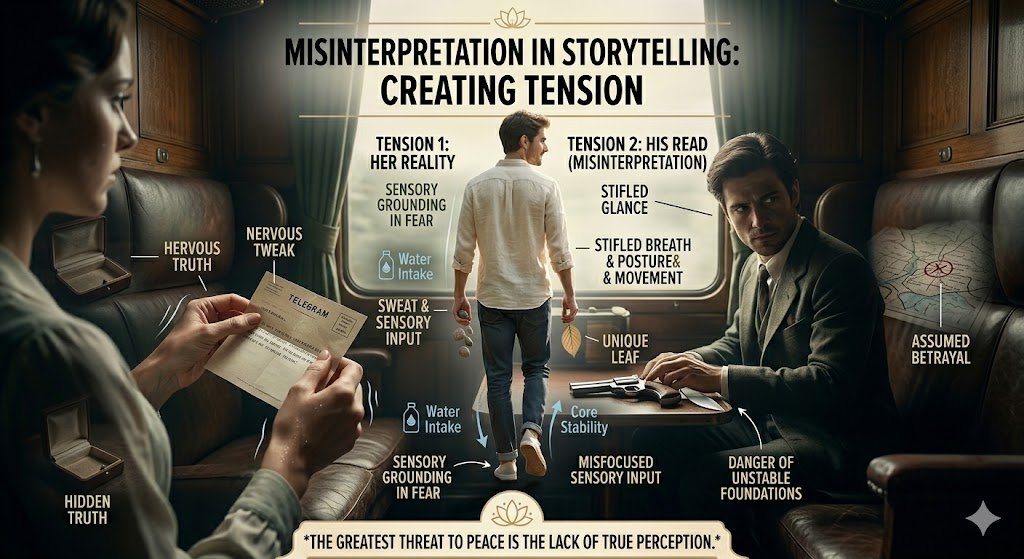
Misinterpretation can be used to create tension in a variety of ways, from subtle misunderstandings to full-blown conflicts. One technique is to use cognitive distortions to create unrealistic expectations or assumptions, leading to misunderstandings and conflict. Another approach is to use communication breakdowns to create confusion or mistrust between characters. By using these techniques, writers can craft scenes that are both tense and believable, keeping readers on the edge of their seats.
Resolving Misinterpretation: The Key to Character Growth and Plot Development
While misinterpretation can create tension and conflict, it's also essential to resolve these misunderstandings in a way that feels authentic and satisfying. By using techniques such as active listening, empathy, and open communication, writers can create scenes where characters work through their misunderstandings and come to a deeper understanding of each other. This not only resolves the conflict but also leads to character growth and development, as characters learn to navigate complex social situations and relationships.
Common Pitfalls: Avoiding Unrealistic or Convenient Misinterpretations
One of the biggest pitfalls in using misinterpretation in storytelling is creating unrealistic or convenient misunderstandings. These can feel forced or contrived, pulling readers out of the story and undermining the tension and conflict. To avoid this, writers should strive to create misinterpretations that feel organic and authentic, arising from the characters' personalities, motivations, and circumstances. By doing so, writers can craft compelling narratives that feel both realistic and engaging.
What is the difference between misinterpretation and misunderstanding?
Misinterpretation and misunderstanding are often used interchangeably, but they have distinct meanings. Misinterpretation refers to the act of interpreting something in a way that is not intended, often due to cognitive distortions or communication breakdowns. Misunderstanding, on the other hand, refers to a lack of understanding or a failure to comprehend something. While related, these concepts are not identical, and writers should be aware of the nuances between them when crafting their stories.
How can writers use misinterpretation to create character growth?
Misinterpretation can be a powerful tool for creating character growth, as it allows characters to learn from their mistakes and develop new insights and understanding. By working through misunderstandings and misinterpretations, characters can develop greater empathy, self-awareness, and social skills, leading to more nuanced and realistic character development. Writers can use techniques such as active listening, empathy, and open communication to create scenes where characters work through their misunderstandings and come to a deeper understanding of each other.
What are some common cognitive distortions that can lead to misinterpretation?
Common cognitive distortions that can lead to misinterpretation include all-or-nothing thinking, jumping to conclusions, and emotional reasoning. These distortions can lead characters to misinterpret information, misunderstand each other's intentions, and create conflict. Writers can use these cognitive distortions to create realistic and nuanced characters, as well as to craft compelling conflicts and plot twists.
How can writers avoid using misinterpretation as a convenient plot device?
To avoid using misinterpretation as a convenient plot device, writers should strive to create misunderstandings that feel organic and authentic, arising from the characters' personalities, motivations, and circumstances. This can involve creating complex characters with nuanced motivations, as well as crafting scenes that feel realistic and engaging. By doing so, writers can create compelling narratives that feel both realistic and satisfying, without relying on convenient or contrived misunderstandings.
What role does communication play in resolving misinterpretation?
Communication plays a critical role in resolving misinterpretation, as it allows characters to clarify their intentions, work through misunderstandings, and develop greater empathy and understanding. By using techniques such as active listening, empathy, and open communication, writers can create scenes where characters work through their misunderstandings and come to a deeper understanding of each other. This not only resolves the conflict but also leads to character growth and development, as characters learn to navigate complex social situations and relationships.
Frequently Asked Questions
What is the difference between misinterpretation and misunderstanding?
Misinterpretation and misunderstanding are often used interchangeably, but they have distinct meanings. Misinterpretation refers to the act of interpreting something in a way that is not intended, often due to cognitive distortions or communication breakdowns. Misunderstanding, on the other hand, refers to a lack of understanding or a failure to comprehend something. While related, these concepts are not identical, and writers should be aware of the nuances between them when crafting their stories.
How can writers use misinterpretation to create character growth?
Misinterpretation can be a powerful tool for creating character growth, as it allows characters to learn from their mistakes and develop new insights and understanding. By working through misunderstandings and misinterpretations, characters can develop greater empathy, self-awareness, and social skills, leading to more nuanced and realistic character development. Writers can use techniques such as active listening, empathy, and open communication to create scenes where characters work through their misunderstandings and come to a deeper understanding of each other.
What are some common cognitive distortions that can lead to misinterpretation?
Common cognitive distortions that can lead to misinterpretation include all-or-nothing thinking, jumping to conclusions, and emotional reasoning. These distortions can lead characters to misinterpret information, misunderstand each other's intentions, and create conflict. Writers can use these cognitive distortions to create realistic and nuanced characters, as well as to craft compelling conflicts and plot twists.
How can writers avoid using misinterpretation as a convenient plot device?
To avoid using misinterpretation as a convenient plot device, writers should strive to create misunderstandings that feel organic and authentic, arising from the characters' personalities, motivations, and circumstances. This can involve creating complex characters with nuanced motivations, as well as crafting scenes that feel realistic and engaging. By doing so, writers can create compelling narratives that feel both realistic and satisfying, without relying on convenient or contrived misunderstandings.
What role does communication play in resolving misinterpretation?
Communication plays a critical role in resolving misinterpretation, as it allows characters to clarify their intentions, work through misunderstandings, and develop greater empathy and understanding. By using techniques such as active listening, empathy, and open communication, writers can create scenes where characters work through their misunderstandings and come to a deeper understanding of each other. This not only resolves the conflict but also leads to character growth and development, as characters learn to navigate complex social situations and relationships.