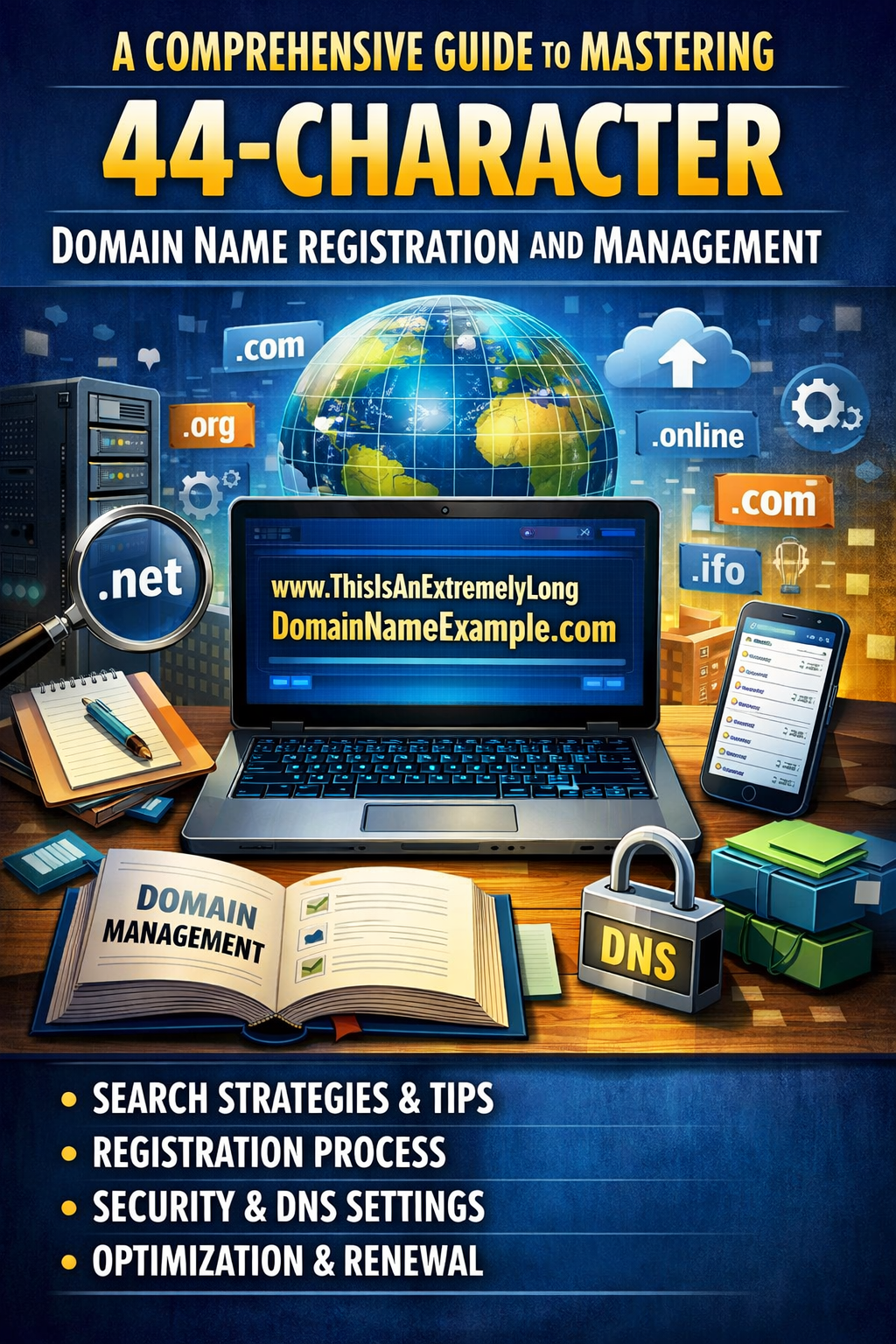
A Comprehensive Guide to Mastering 44-Character Domain Name Registration and Management
The Long and Short of It: A Human Guide to 44-Character Domain Names
Choosing a domain name often feels like a digital land grab. With over 360 million domains already registered, finding that perfect "real estate" for your brand is tough. While we usually aim for short and punchy, there is a specific art to handling 44-character domain names.
Whether you’re dealing with a long, descriptive brand name or a specific campaign URL, managing these longer addresses requires a bit more strategy than your average .com. This guide breaks down how to register and manage these domains without losing your mind (or your traffic).
What Exactly is a 44-Character Domain?
In the world of web addresses, you have a limit. Most domain registries allow for up to 63 characters (excluding the extension like .com). A 44-character domain is a substantial piece of digital property.
Think of it this way:
-
Short:
exbiz.com(5 characters) -
Long:
the-ultimate-organic-sustainable-coffee-collective.com(approx. 44 characters)
While brevity is usually king, longer domains are often used for highly specific SEO niches, legal entities, or descriptive landing pages.
Why Does This Matter?
You might wonder why anyone would want a longer domain. It actually boils down to three things:
-
Clarity: Sometimes, your full legal name or a specific phrase is your brand.
-
SEO Precision: Including long-tail keywords directly in the URL can occasionally help with very specific search queries.
-
Availability: While
pizza.comis gone,the-best-gluten-free-pizza-in-downtown-chicago.comis likely available.
Your Step-by-Step Registration Playbook
Step 1: The "Say It Out Loud" Test
Before you hit "buy," say the 44-character name out loud. If you stumble or have to spell it out three times, your customers will too.
-
Research: Use tools like Lean Domain Search to see if a slightly shorter variation exists.
-
Identify: Pinpoint the core keywords. If the name is long, ensure the most important word is at the beginning.
Step 2: Checking the "Health" of the Domain
Once you have your long name, use a WHOIS lookup to see if it has a history. You don’t want to buy a 44-character domain that was previously used for spam.
-
Registration: Choose a registrar known for clean interfaces—like Cloudflare or Google Domains (now Squarespace)—because managing long strings of text in a messy dashboard is a headache.
-
Lock It Down: Register for at least 2 years. Longer domains are prone to being forgotten during renewal cycles.
Best Practices for the "Long-Tail" Domain
If you’re going big (in character count), follow these rules to keep things professional:
-
Mind the Hyphens: Use hyphens to separate words for readability (e.g.,
best-marketing-toolsvsbestmarketingtools), but don't use more than two or three, or you’ll look like a spam site. -
Stick to Trusted Extensions: With a long name, a
.com,.org, or.netprovides much-needed credibility. -
Auto-Renew is Your Friend: The more obscure the domain, the harder it is to get back if you let it lapse. Turn on auto-renewal immediately.
Common Pitfalls to Avoid
-
The "Typo Trap": The longer the name, the higher the chance of a user mistyping it. Always buy the "obvious" typo versions if they are cheap.
-
Mobile Nightmares: Long URLs can break the layout on mobile browsers or look suspicious in text messages. Always test how the link looks when shared on social media.
Pro Tips from the Trenches
Expert Insight: If your primary domain is 44 characters, buy a "short-link" version too. Use the long one for SEO and the short one for your business cards and Instagram bio.
Also, consider Defensive Registration. If you own very-long-brand-name.com, grab the .net or .biz versions just so a competitor can't sit on them and confuse your customers.
Helpful Resources
-
Generators: Namelix or Panabee (Great for finding variations).
-
Management: MainWP or DomainTools (If you end up managing a whole portfolio of long names).
-
Security: DNSimple (For easy-to-manage DNS records that won't get confusing).
The Bottom Line
A 44-character domain isn't a weakness—it's a tool. When managed correctly with a focus on readability and security, it can give your brand a specific, descriptive edge in a crowded market.
Ready to claim your corner of the internet? Start brainstorming, keep your customers' ease of use in mind, and secure that domain before someone else does!
Frequently Asked Questions
What is a 44-character domain name?
A 44-character domain name is a web address with up to 44 characters, including letters, numbers, and hyphens, used to identify a website online.
How do I register a 44-character domain name?
Register a 44-character domain name through a reputable registrar, providing required contact info and payment, then verify domain ownership via email.
Can I use special characters in a 44-character domain name?
Yes, you can use hyphens in a 44-character domain name, but other special characters like @ or # are not allowed, following ICANN guidelines.
How long does it take to register a 44-character domain name?
Domain name registration typically takes a few minutes to an hour, depending on the registrar and verification process, after which it's active online.
What is domain name management for 44-character domains?
Domain name management involves renewing, updating, and securing your 44-character domain, including DNS settings and contact info, to maintain control.
Why is it important to renew my 44-character domain name?
Renewing your 44-character domain name prevents expiration, maintaining website accessibility and preventing cybersquatters from claiming your domain.