How to show time management skills in a remote interview
Table of Contents
- Understanding the Importance of Time Management in Remote Interviews
- Preparing Examples of Time Management Skills
- Answering Behavioral Interview Questions Related to Time Management
- Demonstrating Time Management Skills During the Remote Interview
- Follow-up and Next Steps
Understanding the Importance of Time Management in Remote Interviews
Time management is a crucial skill for any professional, and it becomes even more critical when working remotely. Without direct supervision, remote workers need to be self-disciplined and organized to manage their time effectively. In a remote interview, showcasing your time management skills can be a key differentiator, as it demonstrates your ability to work independently and efficiently. To understand the importance of time management in remote interviews, it's essential to consider the challenges of remote work, such as distractions, lack of structure, and limited face-to-face interaction. By highlighting your time management skills, you can reassure the interviewer that you can overcome these challenges and deliver high-quality results.
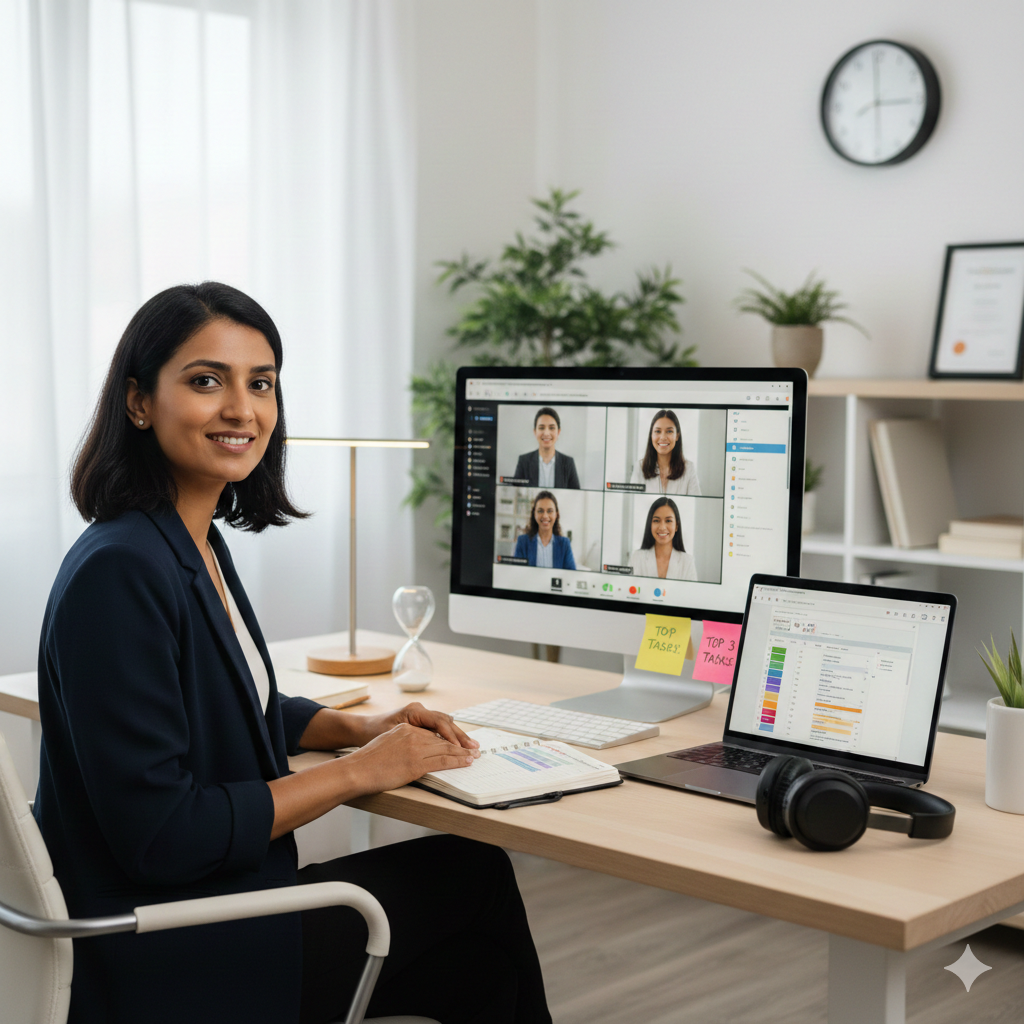
For instance, you can explain how you use tools like Trello, Jira, or Monday.com to prioritize tasks, set deadlines, and track progress. You can also describe your daily routine, including how you allocate time for work, breaks, and self-care. By providing specific examples, you can demonstrate your ability to manage your time effectively and stay productive in a remote work environment.
Preparing Examples of Time Management Skills
To showcase your time management skills in a remote interview, it's essential to prepare examples that demonstrate your ability to prioritize tasks, manage your time, and meet deadlines. One approach is to use the STAR method, which involves describing a situation, task, action, and result. For example, you might describe a project you worked on remotely, explaining how you prioritized tasks, managed your time, and delivered the project on schedule. Be sure to provide specific details, such as the tools you used, the challenges you faced, and the results you achieved.
Another approach is to prepare examples that demonstrate your ability to adapt to changing circumstances, such as a sudden change in priorities or an unexpected interruption. By showing that you can adjust your schedule and tasks to accommodate changing circumstances, you can demonstrate your flexibility and ability to manage your time effectively in a remote work environment. For instance, you can describe a situation where you had to adjust your schedule to accommodate a last-minute meeting or a change in project priorities.
Answering Behavioral Interview Questions Related to Time Management
Behavioral interview questions are designed to assess your past behavior and experiences, and they can be particularly relevant when it comes to time management. Common examples of behavioral interview questions related to time management include "Tell me about a time when you had to meet a tight deadline," "Describe a situation where you had to prioritize multiple tasks," or "Can you give an example of a project you managed remotely and how you ensured its timely completion?" To answer these questions effectively, it's essential to provide specific examples from your past experience, using the STAR method to structure your response.
When answering behavioral interview questions, be sure to emphasize your time management skills, such as prioritization, organization, and self-discipline. You can also highlight any tools or techniques you used to manage your time, such as project management software, calendars, or to-do lists. By providing detailed examples and emphasizing your time management skills, you can demonstrate your ability to work efficiently and effectively in a remote work environment.
Demonstrating Time Management Skills During the Remote Interview
While preparing examples and answering behavioral interview questions are essential, it's also important to demonstrate your time management skills during the remote interview itself. This can involve being punctual, prepared, and organized, as well as showing that you can manage your time effectively during the interview. For example, you can arrive early to the interview, have all the necessary materials ready, and be prepared to answer questions efficiently and effectively.
Additionally, you can demonstrate your time management skills by being mindful of the interview schedule and ensuring that you stay within the allotted time frame. You can also show that you can prioritize tasks and manage your time by providing concise and relevant answers to the interviewer's questions. By demonstrating your time management skills during the remote interview, you can reinforce your examples and answers, and show the interviewer that you can work efficiently and effectively in a remote work environment.
Follow-up and Next Steps
After the remote interview, it's essential to follow up with the interviewer and express your gratitude for the opportunity. You can also reiterate your interest in the position and highlight your time management skills, emphasizing how they align with the job requirements. Additionally, you can ask about the next steps in the process and when you can expect to hear back from the interviewer.
By following up and reiterating your time management skills, you can leave a positive impression on the interviewer and demonstrate your enthusiasm for the position. You can also show that you are proactive and self-disciplined, which are essential qualities for remote workers. By emphasizing your time management skills and following up after the interview, you can increase your chances of success and demonstrate your ability to work efficiently and effectively in a remote work environment.