E-commerce: India’s Biggest Revenue Giant – The Complete Story of 2025
By TricksBiz Editorial Team · Published
E-commerce is no longer just a shopping option in India — it has quietly become one of the country’s largest revenue generators and a global attraction. In 2025, the Indian online retail market is racing past ₹12–14 lakh crore in Gross Merchandise Value (GMV), making it bigger than many traditional industries. But this giant brings both celebration and concern.
Why the World Is Watching India’s E-commerce Boom
- Global investors have poured over $50 billion into Indian startups in the last decade.
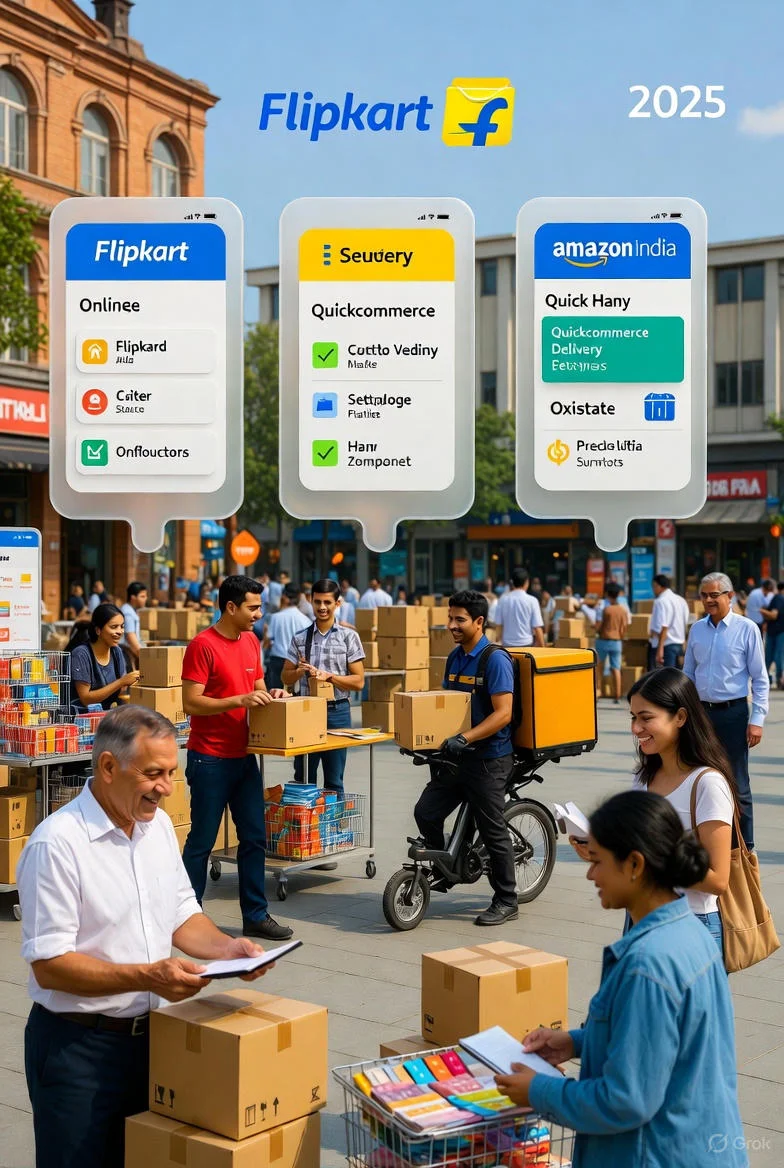
- Flipkart-Walmart, Amazon India, Reliance JioMart, Meesho, Zepto, Blinkit — every big name wants a slice of the world’s fastest-growing e-commerce market.
- During the 2025 festive sale season alone, platforms are expected to clock ₹1.25 lakh crore in just 10–15 days!
Bread & Butter for Millions
E-commerce has become the daily income source for lakhs of Indians:
- Small-town sellers, women entrepreneurs, and artisans earning lakhs monthly through Meesho and Amazon.
- Over 1.5 crore jobs created — delivery boys, warehouse workers, packers, customer support, and photographers.
- Even local kirana stores are earning extra by becoming mini-warehouses for Zepto, Blinkit, and Swiggy Instamart.
The Other Side: Not Everyone Is Smiling
- Many traditional shopkeepers in cities report 20–40% drop in footfall.
- Heavy discounts and “buy-now-pay-later” schemes sometimes squeeze vendor margins.
- Weekly haats and wholesale markets in some areas have slowed down.
- Small offline retailers feel they can’t compete with 10-minute delivery and endless offers.
But the Growth Story Is Unstoppable
Every big revolution creates winners and some losers:
- When mobile phones came, landline shops closed — but millions got connected.
- When Ola/Uber arrived, auto-rickshaws suffered — but travel became cheaper and safer.
Today, the smartest traditional traders are not fighting e-commerce — they are joining it:
- Adding WhatsApp ordering and home delivery.
- Listing products on Meesho and local apps.
- Partnering with quick-commerce platforms.
The Final Verdict
Yes, a few margins have been lost. Yes, some traditional businesses have slowed down. But look at the bigger picture:
- Rural India is shopping like never before.
- Indian handicrafts and sarees are selling to customers in the USA and Europe.
- Tax collection, formal jobs, and consumer choice have exploded.
E-commerce is not killing retail — it is transforming it. The shops that adapt are growing faster than ever. The ones that don’t… well, change has always been tough.
In 2025, one thing is clear: E-commerce is not just a revenue giant — it is India’s digital future. And the future is already here.
Keep shopping, keep selling, keep growing!
This article is general information, not professional advice. Rules, fees and eligibility change — confirm with the official source or a qualified professional before acting.